Ever noticed how the loudest statements on Russian roads these days are whispered, not shouted? Forget the gaudy neon underglow or those aftermarket rims that scream for attention; the real cool kids are doing something far more subtle. They’re messing with the most rigidly controlled part of the car—the state-issued license plate—without actually breaking a single screw. It’s a weird paradox, isn't it? You take a piece of stamped steel, mandated by federal law down to the last millimeter, and you just... add a name. Your name.
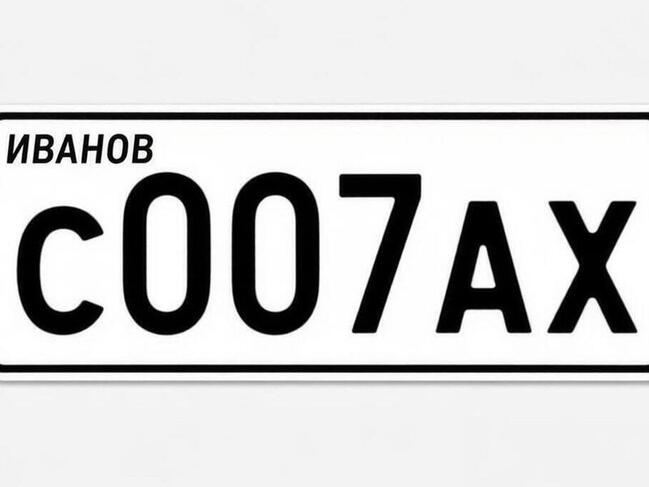
The standard plate is a sterile thing: white background, black serif digits, and that little regional box on the side. Boring? Absolutely. But drivers have found a loophole in the visual noise. By applying a surname—via vinyl, paint, or even embossing—right there in the unused white margins, they are staking a claim. The official digits? Untouched. The font? Official. It’s still a factory specimen, just with a bit of "you" splashed on the side. Who would’ve thought that blank space was just waiting for a monogram?
A Family Name on Stamped Steel
Is it just automotive snobbery? A harmless bit of flair like monogramming a shirt cuff? Or are we looking at the slippery slope of illegal modification? I’ve spoken to folks in St. Petersburg who live and breathe this trend, and they’ll tell you straight: "I’m not changing the numbers the state assigned me. The blank space was always there. I’m just using it." Can you really argue with that logic? It feels victimless.
And where there’s a trend, there’s a hustle. Small print shops have caught on, offering custom surname decals cut with laser precision to fit those specific margins. They market them as "fully compliant with state design standards." Is that a bold claim or a desperate marketing pitch? We don't know yet; it hasn't faced the courts. But the demand is hysterical. Shop owners are grinning all the way to the bank, reporting a 30% month-over-month spike in orders since September 2024. It’s a gold rush, but for stickers.
The Legal Gray Area
Now, let’s talk brass tacks. Russian traffic regulations are notoriously strict. Article 12.2 of the Code of Administrative Offenses is pretty clear: no extraneous markings, no alterations. Yet, the enforcement is a total lottery. Depending on which region you’re in, or which officer you flag down, you might get a shrug or a fine of up to 5,000 rubles. Do it again? Say goodbye to your license for a month. It’s a wild inconsistency that leaves everyone guessing.
- Fines that sting, but won't bankrupt you (up to 5,000 rubles).
- A one-month suspension of your driver's license for repeat offenders—now that hurts.
- Vehicle impoundment? Only if you’re thick enough to actually alter the registration data.
I remember chatting with a senior traffic officer in the Moscow region—off the record, of course. He sighed, leaning against his patrol car. "We focus on plates where the number is hard to read, or fake plates. A surname in the margin? That’s not a priority." But then he paused. "But the letter of the law says no extra markings. It’s a gray area." So, you’re safe until you aren't. Isn't that just the perfect summary of the situation?
So, where does that leave the average driver with a personalized plate? For now, the trend is exploding, unimpeded by clear regulatory action. Will the authorities eventually wake up and start cracking down on these "criminals" with surnames on their steel? Or will this quiet customization craze become a permanent, quirky fixture of Russian roads? Only time—and a few brave souls testing the waters in traffic court—will tell. Until then, keep your surname sharp and your digits clean.