There's something almost rude about celebrating Miuccia Prada's birthday with pretty pictures. The woman despises the word "beautiful" — says it's been beaten to death in fashion circles, right alongside "luxury" and "chic." And yet here we are, doing exactly what she'd side-eye us for. Ten photographs. Her favorite editorial gimmick. Fine. Let's get it over with.
Seventy-seven, and still sharp enough to cut silk in half
For the March 2024 issue of American Vogue, Miuccia sat down for a conversation that spanned continents of thought. Fashion takes up roughly one third of her life, she said. Culture — the other third, crystallized in Fondazione Prada. The remaining stretch? Family, friends, "certain pleasures." Every morning she decides who she's going to be: a fifteen-year-old girl or a grandmother on her way out. That's either terrifying or the most honest morning routine anyone's ever described.
The girl called Miu Miu
Born in 1949, she was known as Miu Miu in childhood — and that nickname would later become the label's feisty little sister brand. Her résumé before stitching a single garment reads like a fever dream: a doctorate, philosophy, five years of mime, membership in the Communist Party, activism for women's rights. In 1978 she replaced her mother Luizia at the helm of a company her grandfather Mario founded in 1913. By 1989, alongside her husband and business partner Patrizio Bertelli, she started dismantling the industry from the inside.
"I would say the Prada woman does not exist," she told Interview back in 2012. "I'm interested in women in general. I have no preferences. I do what I think is right." No mystique. No romanticism. Just a woman drawing a line in the sand and walking on the correct side of it.
Ugly shoes and the gospel of useful
Beauty is overrated. That's her thesis. And she's been proving it for nearly five decades — by turning things that should repel you into things you'd kill for. Ugly shoes. Waders. Banana prints. She weaponized the unlovely and somehow made it the most coveted thing on earth. The trick? Balancing the conceptual with the commercial as if it were child's play. Which, knowing her, it might literally be.
When Mexican-American artist Hugo Wertheim asked her about resistance, she lit up. "Resistance is a word I really like. What it means is very complicated." She talks to artists because they resist. Clothes used to be part of protest — but the roots go deeper. "Dress according to your thoughts," she says. Not according to some algorithm. Not according to what a man on a yacht might prefer. "There is no politically correct dress code. I've gone to demonstrations in Saint Laurent. And vice versa. Any gesture can be political. Politics is much more than clothing."
The uniform that sets you free
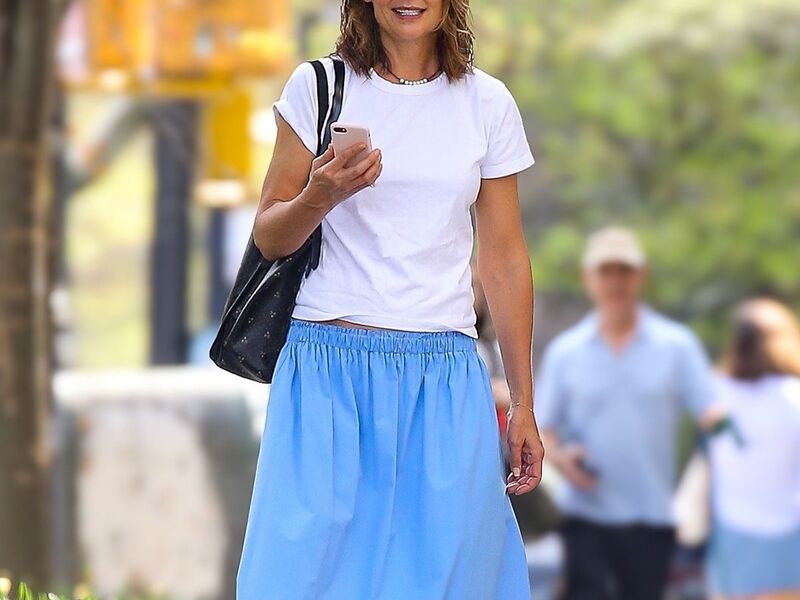
Ask her what she wears, and the answer is oddly calming: knee-length skirts — wrinkled or pleated, doesn't matter — crisp white tees, gray cardigans, vintage jewelry, coats worn like evening gowns, and shoes that make other people wince. Those fuzzy yellow Miu Miu slides with chunky beads? They're on her feet in half the archive. The uniform works because it eliminates the morning drama. You wake up, you reach for the same shelf, and you're free. In your uniform, you're untouchable.
For Purple Magazine, her longtime friend and photographer Manuela Pavesi — who passed away in 2015 — caught her in an autumn-winter 2009 editorial. Miuccia was blunt about Milan, her hometown: she doesn't want to talk about it. She likes it when strange things appear normal, classical, easy. "When other designers do something absurd, nobody seems surprised, but my male skirts are considered outrageous. For me, that means I was right. It's both a way to progress within my brand and a way to understand how to spread ideas."
Politics or medicine — the two noble professions
"I always thought there were only two noble professions: politics or medicine," she told Vogue. "Making clothes as part of a group of very important intellectuals was a nightmare for me. I was ashamed, but I did it anyway… Love for beautiful things won out."
The 1996 photograph with Carla Bruni is almost tender in its casualness — two women who'd both reshape fashion, standing close like they'd just shared a cigarette and a secret. That image alone could launch a thousand essays, and none of them would be enough.
The woman who dresses five years ahead
This isn't marketing fluff. It's a pattern you can actually trace on a calendar. Nylon backpacks, launched in the early '90s, looked like something you'd take camping. Prada turned a non-luxurious, waterproof fabric into a status symbol. She didn't follow trends — she mailed them to the future and stamped them return-to-sender. Today the Prada team is working to produce those same backpacks from a more sustainable version of the material. The thread never breaks.
Her 1990 quote to The New Yorker still stings with relevance: "I want to mix the industrial way of doing business with the heritage of the past, with artisanal traditions." That sentence could run a startup, a museum, a revolution.
Fondazione Prada: the place where capitalism goes to think
She doesn't invite artists to design her collections. Not because she doesn't respect them, but because she refuses to use art as a glittery coat over her work. "I don't want people to think I'm using art to make my job more glamorous," she says. "Maybe I'm the last professional moralist."
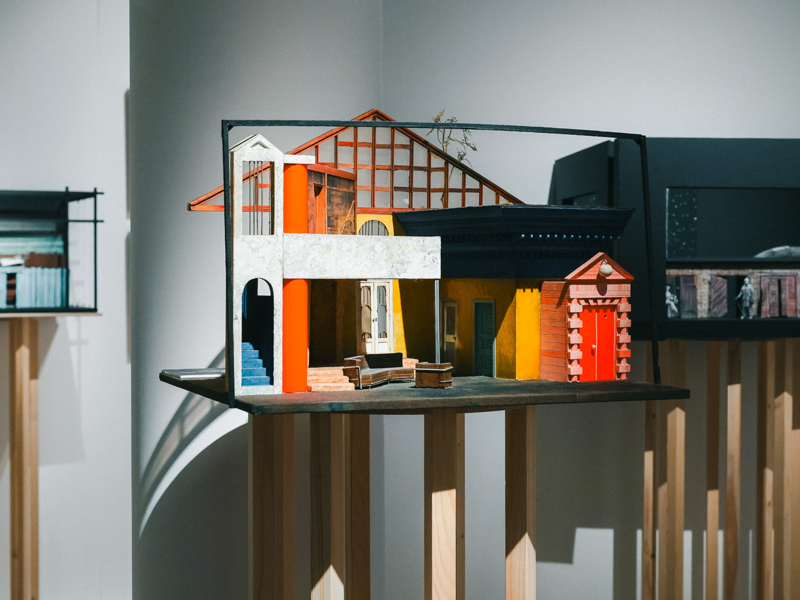
Fondazione Prada — part gallery, part fashion temple, part quarantine zone from commercial vultures — has hosted personal exhibitions by Laurie Anderson and Carsten Höller. Her home, by all accounts, is dense with paintings and objects collected with the same intensity she brings to a fabric sample. "Fashion, art, culture, politics — it's all interconnected," she says. And she means it the way some people mean gravity: as a law, not an opinion.
The Annie Leibovitz frame
For March 1997 American Vogue, Annie Leibovitz pressed the shutter, and the result is one of those images that doesn't age because it already looks like a memory you haven't made yet. Miuccia, somewhere between the light and the shadow, said: "What you wear is how you present yourself to the world, especially now when human connections are so fast. Fashion is the language of instant messages."
Seventy-seven years old. A doctorate in political science. Five years of mime. A company her grandfather stitched together in 1913. And still — still — every morning she decides whether she's fifteen or almost gone. That's not a brand strategy. That's a life.